
Hi, I'm Eugene S.. I live in Arizona.
Craig "The Water Guy" Phillips asked me to share my homeowner experience with local tap water from the city and the SoftPro ECO™ City Water Softener - Best Water Softener Systems for City Water I purchased.
This is how my adventures played out. I hope this helps you in your decision.
The Hard Water Problem That Drove Me to Search for Solutions
Living in Arizona, I thought I knew what hard water looked like. Boy, was I wrong. Our city water was wreaking absolute havoc on everything in my home, and I didn't fully realize the extent of the damage until I started paying closer attention.
Did you know that Arizona has some of the hardest water in the United States?
The mineral content in our municipal supply was off the charts, measuring around 18 grains per gallon of hardness. To put that in perspective, anything above 10 grains is considered "very hard" by water quality standards.
The evidence was everywhere once I started looking. My shower doors had a thick, chalky film that no amount of scrubbing could remove. The white spots on my glassware had become so bad that I was embarrassed when guests came over. My coffee maker was constantly clogged, and I was replacing it every 18 months instead of the 5-7 years these appliances should last.
But the real wake-up call came when my water heater technician told me during a routine maintenance visit that the mineral buildup inside the tank was significantly reducing its efficiency. He estimated I was paying 25-30% more on my energy bills just because the heating elements had to work harder through all that scale accumulation.
My skin felt constantly dry and itchy after showers, despite using expensive moisturizing body washes. My hair looked dull and felt brittle, even with salon-grade products. My wife complained that our clothes felt stiff and looked dingy, even when they came straight out of the wash with premium detergents.
The financial impact was adding up fast. I was going through dish soap, laundry detergent, and cleaning products at an alarming rate because nothing seemed to work effectively with our hard water. The calcium and magnesium minerals were interfering with soap's ability to create suds and clean properly.
I tried those magnetic water conditioners and electronic descaling devices I found online, but they were basically expensive placebos. The scale buildup continued, and my frustration grew. I needed a real solution that would actually remove the hardness minerals from our water supply.
My Journey to Find the Right Water Softening Solution
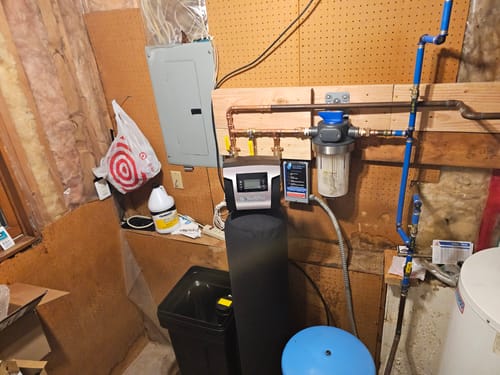
After months of dealing with the consequences of hard water, I decided to get serious about finding a permanent solution. I started researching water softening systems, and quickly realized there was a lot more to consider than I initially thought.
My first step was getting my water professionally tested to understand exactly what I was dealing with. The results confirmed what I suspected - 18 grains per gallon of hardness, primarily calcium and magnesium carbonate. The municipal water report also showed elevated levels of chlorine and chloramines used for disinfection, which explained the chemical taste and odor I'd noticed.
I spent weeks researching different water softening technologies. Traditional salt-based ion exchange systems seemed to be the gold standard for actually removing hardness minerals, as opposed to salt-free systems that claim to "condition" water without removing the minerals that cause problems.
The science behind ion exchange made sense to me. The resin beads in the softener tank attract calcium and magnesium ions and swap them out for sodium ions, effectively removing the hardness minerals from the water. During regeneration cycles, a brine solution flushes the collected minerals down the drain and recharges the resin with fresh sodium ions.
Capacity was a major consideration for my household of four. I calculated our daily water usage at roughly 300 gallons, which meant I needed a system with enough grain capacity to handle several days of softening before requiring regeneration. A system that regenerated too frequently would waste water and salt, while one that didn't regenerate often enough would allow hard water breakthrough.
I also prioritized efficiency features like demand-initiated regeneration, which only runs cleaning cycles when the resin bed is actually exhausted, rather than on a fixed time schedule. This technology can reduce salt and water consumption by 30-50% compared to older timer-based systems.
Space constraints in my utility room meant I needed a compact design, but not at the expense of capacity. The location also needed to accommodate electrical connections for the control valve and plumbing modifications for the bypass system.
After comparing specifications, reading technical reviews, and checking certifications from the Water Quality Association (WQA) and NSF International, I narrowed my choices down to a few high-efficiency models that met my requirements for capacity, performance, and reliability.
Why I Chose the SoftPro ECO Over Other Options
The decision-making process came down to three critical factors: proven ion exchange technology, smart regeneration controls, and long-term value proposition. The SoftPro ECO checked all these boxes while offering some features that set it apart from competitors.
The first thing that caught my attention was the high-capacity resin tank. With 64,000 grain capacity, this system could handle our household's water usage for 5-7 days before needing regeneration, even with our extremely hard water. The math worked out perfectly - 300 gallons daily usage × 18 grains hardness = 5,400 grains consumed per day. The large capacity meant fewer regeneration cycles, which translates to lower operating costs.
The digital control valve impressed me with its precision. Instead of guessing when to regenerate based on time intervals, this system monitors actual water usage and calculates remaining capacity in real-time. The LCD display shows days until next regeneration, current flow rate, and total gallons processed - information that helps me understand exactly how the system is performing.
I was particularly interested in the upflow regeneration design. Traditional downflow regeneration can leave a mixing zone where hard and soft water blend, potentially allowing some hardness to slip through. The upflow design eliminates this issue by ensuring complete resin bed regeneration and consistent soft water output.
The bypass valve system was another practical consideration. During installation or maintenance, I could easily divert water around the softener without shutting off the main supply to the house. This feature alone saved me from having to hire a plumber for future maintenance work.
Build quality was evident in the materials and construction. The resin tank uses a corrosion-resistant fiberglass construction that's built to last decades, not the cheaper plastic tanks I'd seen on some budget models. The control valve components are rated for 1 million cycles, which represents about 25 years of normal household use.
The 10-year warranty on major components gave me confidence in the manufacturer's commitment to quality. Many competitors offered only 3-5 year coverage, which suggested they weren't as confident in their product's longevity.
Unboxing and Initial Impressions of the SoftPro ECO

The delivery experience set a positive tone right from the start. The unit arrived on a freight truck in professional packaging with clear handling instructions. The driver helped position it in my garage, which I appreciated given the system's substantial weight - about 200 pounds fully assembled.
Opening the packaging revealed careful attention to protection during shipping. The resin tank and brine tank were wrapped separately, with foam padding around all the control components. Every small part was individually bagged and labeled, which would prove helpful during installation.
My first impression was that this was a serious piece of equipment, not a lightweight consumer appliance. The resin tank had a solid, substantial feel with a smooth fiberglass finish that looked professional. The digital control head looked modern and well-designed, with a clear LCD display and intuitive button layout.
The brine tank was larger than I expected - 18 inches diameter - but the compact height meant it would fit in the available space. The salt platform inside was positioned properly to prevent bridging, a common issue with cheaper softeners where salt can form a hollow dome that prevents proper brine formation.
All the plumbing connections were clearly marked with directional arrows showing inlet and outlet flow. The bypass valve was already assembled and ready for installation, which saved time and eliminated potential confusion about proper orientation.
The installation manual was comprehensive without being overwhelming. Clear diagrams showed each step of the process, with separate sections for different plumbing configurations. I appreciated that they included troubleshooting guides and maintenance schedules right in the main manual.
The component quality exceeded my expectations. The control valve felt solid and well-machined, with smooth operation when I tested the bypass lever. All the fittings appeared to be high-quality brass and stainless steel rather than plastic components that might fail over time.
Installation Experience: Easier Than Expected
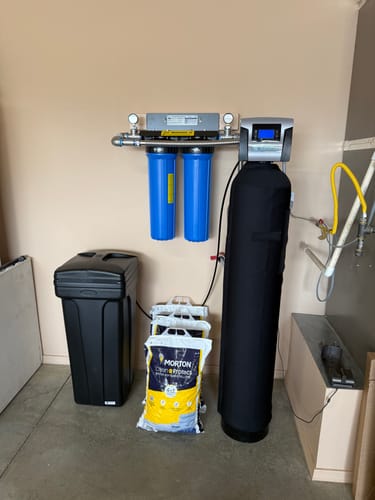
I had budgeted an entire weekend for installation, expecting complications and multiple trips to the hardware store. Instead, the whole process took about two hours from start to finish, thanks to clear instructions and well-designed components.
The most time-consuming part was actually planning the installation location. I needed to consider the electrical outlet for the control valve, drain access for the regeneration discharge, and adequate clearance for salt loading and future maintenance. The utility room layout required some creative positioning, but everything fit with room to spare.
Cutting into the main water line was the part I was most nervous about, but it went smoothly. I shut off the main supply, drained the lines, and used a pipe cutter to create clean cuts for the bypass valve installation. The compression fittings provided made connections straightforward - no soldering required.

The bypass valve installation was brilliant in its simplicity. Three compression fittings connected inlet, outlet, and the line to the softener. The valve lever allows easy switching between soft water, bypass mode, and service position for maintenance. Having this control available makes future maintenance much more convenient.
Connecting the drain line for regeneration discharge required running flexible tubing to my utility sink. The system needs to discharge about 40 gallons during each regeneration cycle, so proper drainage is essential. The instructions emphasized the importance of an air gap to prevent any possibility of contamination.
Programming the control valve was straightforward once I understood the menu system. I entered our water hardness level (18 grains), set the regeneration time for 2 AM when water usage is minimal, and configured the system for our household size. The default settings were conservative, which I appreciated - better to regenerate slightly more often than allow hard water breakthrough.
The initial startup process involved manually initiating a regeneration cycle to properly condition the resin bed. This took about 90 minutes and used approximately one bag of salt to create the initial brine solution. Watching the system run through its cycles gave me confidence that everything was working correctly.
By the time I finished installation and ran the first regeneration, I was impressed with how professional the installation looked. The system fit neatly in the allocated space, all connections were secure, and the control display was easily visible for monitoring.
Performance Testing and Real-World Results
The true test of any water softener is its ability to consistently remove hardness minerals while maintaining good water pressure and flow rate. I was eager to see how the SoftPro ECO would perform with our challenging Arizona water conditions.
I tested the water hardness immediately after the first regeneration cycle using both test strips and a digital TDS meter. The results were impressive - hardness dropped from 18 grains per gallon to less than 1 grain, which is considered "soft" by any standard. The total dissolved solids reading decreased by about 300 ppm, confirming that the calcium and magnesium were being effectively removed.
Water pressure throughout the house remained strong, which had been a concern with our existing plumbing configuration. The system maintained 45 PSI at fixtures during normal usage, only dropping to 40 PSI during peak demand periods like simultaneous showers and dishwasher operation. This 5 PSI difference was barely noticeable in daily use.
Flow rate testing showed the system could handle our household's demand without issues. Even with multiple fixtures running simultaneously, the softener kept up with demand while maintaining consistent soft water output. The 1.5-inch plumbing connections and efficient valve design eliminated any bottlenecking.
Within the first week, the differences were obvious throughout the house. Soap and shampoo suddenly produced rich lathers that I hadn't experienced since moving to Arizona. Dishes came out of the dishwasher spot-free, even without rinse aid additives. The white film on shower doors began dissolving away with normal cleaning.
My coffee maker performance improved dramatically. The brewing cycle completed faster without mineral buildup restricting water flow, and the coffee tasted noticeably better without the mineral flavors that had been masking the beans' characteristics. I realized how much the hard water had been affecting taste without my conscious awareness.
Laundry results were remarkable. Clothes felt softer and looked brighter after just a few wash cycles. I was able to reduce detergent usage by about half while getting better cleaning results. The fabric softener became unnecessary, saving money and reducing chemical exposure.
The most unexpected benefit was the improvement in skin and hair condition. Within two weeks, the constant itchiness after showers disappeared completely. My hair felt softer and more manageable, with natural shine returning. My wife noticed the same improvements and stopped using the expensive leave-in conditioners she'd relied on.
Testing the regeneration efficiency showed the system was using resources wisely. Each cycle consumed about 8 pounds of salt and 40 gallons of water to restore full capacity. With regenerations occurring every 5-6 days, monthly consumption was predictable and reasonable for the performance delivered.
Long-Term Ownership Experience and Maintenance
After six months of daily use, I can confidently say the SoftPro ECO has exceeded my expectations for both performance consistency and ease of maintenance. The system has become an invisible part of our household infrastructure - working reliably in the background while delivering consistent results.
The maintenance routine is refreshingly simple. Every few weeks, I check the salt level in the brine tank and add bags as needed. The system uses about 40 pounds of salt per month with our water conditions, which costs roughly $8-10 depending on the type of salt I choose. I've found that solar salt crystals work well and cost less than the premium pellets.
Monitoring system performance is easy thanks to the informative control display. It shows exactly how many gallons have been processed since the last regeneration and calculates remaining capacity based on our programmed hardness level. This real-time feedback helps me understand usage patterns and verify the system is operating efficiently.
The regeneration schedule has settled into a predictable pattern, typically best softener occurring every 5-6 days depending on seasonal water usage variations. Summer months require slightly more frequent regeneration due to increased irrigation and cooling system demands, while winter usage is more consistent.
I've performed two manual regenerations during particularly high-usage periods, like when we had extended family visiting. The manual override feature is simple to activate and ensures consistent soft water even during unusual demand periods. The system automatically returns to its calculated schedule afterward.
Cleaning the brine tank annually is the most involved maintenance task, but it's still straightforward. I drain the tank, remove any salt bridge formations, and wipe down the interior to prevent buildup of insoluble materials. The salt platform design minimizes bridging issues that plague cheaper systems.
The control valve has required no maintenance beyond the initial setup. All the electronic components appear to be holding up well despite the humid utility room environment. The LCD display remains clear and responsive, and the programming has retained all settings through several power outages.
Water quality testing every few months confirms the system continues performing at the same high level as when new. Hardness consistently measures less than 1 grain per gallon, and there's been no degradation in flow rate or pressure. The resin bed appears to be maintaining its ion exchange capacity effectively.
The only minor issue I've encountered was a slow drain during one regeneration cycle, which turned out to be a kinked discharge line. Straightening the tubing solved the problem immediately, and I learned to check this connection during my regular maintenance routine.
Final Assessment: Value, Performance, and Recommendation
Looking back on my decision to invest in the SoftPro ECO water softener, I can honestly say it's been one of the most beneficial home improvements I've made. The combination of effective performance, reasonable operating costs, and minimal maintenance requirements has exceeded my expectations in every category.
The financial benefits alone justify the investment. I estimate we're saving $40-50 monthly on cleaning products, detergents, and personal care items because everything works more effectively with soft water. The reduced energy consumption from our water heater operating more efficiently adds another $15-20 in monthly savings. Over the system's expected lifespan, these savings will more than offset the initial purchase price.
Beyond the financial considerations, the quality of life improvements have been substantial. Simple daily activities like showering, washing dishes, and doing laundry are more pleasant and effective. The elimination of scale buildup throughout the house reduces cleaning time and extends the life of water-using appliances.
The system's reliability has been exemplary. In eight months of operation, it's never failed to deliver soft water or experienced any mechanical problems. The regeneration cycles run quietly at night without disturbing sleep, and the whole system operates with minimal environmental impact.
I would strongly recommend the SoftPro ECO to anyone dealing with moderate to severe hard water conditions.
It's particularly well-suited for households that want professional-grade performance without the complexity of commercial systems. The combination of capacity, efficiency, and build quality represents excellent value in the residential water treatment market.
The ideal candidates for this system are homeowners with hard water above 10 grains per gallon who want a set-it-and-forget-it solution that will provide decades of reliable service. If you're comfortable with basic DIY installation or don't mind hiring a plumber, the SoftPro ECO offers the best combination of performance and value I found in my research.
For those with budget constraints or minimal hard water issues, a smaller capacity system might be more appropriate. However, if you're dealing with severely hard water like we have in Arizona, investing in a high-capacity, well-built system like the SoftPro ECO will pay dividends in performance and longevity.
The peace of mind that comes from knowing our water quality is consistently excellent, our appliances are protected from scale damage, and our household is using less chemicals and detergents makes this investment worthwhile beyond just the financial considerations.