
Hi, I'm Fu Zhen from Rhode Island. When Craig "The Water Guy" Phillips reached out asking me to share my honest experience with the SoftPro ECO™ City Water Softener, I was happy to help other homeowners who might be struggling with the same water issues I faced. What started as a desperate search for cleaner city water turned into an eight-month journey that completely transformed our household's relationship with water. Here's exactly how everything unfolded, and I hope my experience helps guide your decision.
The Hard Water Problem That Started It All
Did you know that even treated city water can wreak havoc on your home and health?
I certainly didn't realize this until the problems became impossible to ignore.
Living in Rhode Island, I always assumed our municipal water was perfectly fine. After all, it's treated and regulated, right? But by early 2024, the signs were everywhere. Our beautiful stainless steel appliances were covered in white, chalky spots that no amount of scrubbing could remove. My wife started complaining about her hair feeling "crunchy" after showers, and I noticed my skin was constantly dry and itchy.
The breaking point came when our dishwasher started leaving our glassware looking cloudier than when we put it in. I tested our water with a simple TDS meter and was shocked to find readings of 340 parts per million – well above the recommended levels for household use. Our water hardness measured at 18 grains per gallon, which explained the mineral buildup destroying our fixtures.
What frustrated me most was the ongoing cost. We were going through bottle after bottle of specialty cleaners, replacing shower heads every few months, and I could see limestone deposits building up in our water heater. The city's chlorine treatment was doing its job for safety, but it was leaving behind all the dissolved minerals that were slowly damaging everything in our home.
I tried those magnetic water conditioners and various filter pitchers, but nothing addressed the core problem. The calcium carbonate and magnesium sulfate in our municipal supply needed a more comprehensive solution than these band-aid fixes could provide.
Research Journey: Finding the Right Water Treatment Solution
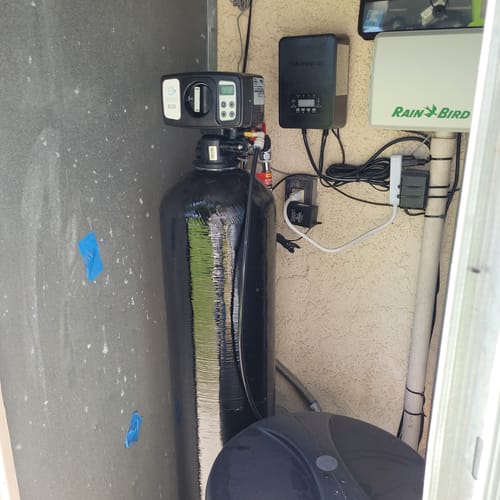
My research phase lasted about six weeks, and I quickly learned that not all water softening systems are created equal. I needed something specifically designed for city water challenges – not well water issues that many systems target.
The first decision was choosing between salt-based ion exchange systems versus salt-free water conditioners. After reading about the science, I understood that true water softening requires ion exchange resin that physically removes hardness minerals, replacing them with sodium ions. Salt-free systems only condition water by changing the structure of minerals, but they don't actually remove them.
For our situation with 18 GPG hardness, I needed genuine removal, not just conditioning. The SoftPro ECO caught my attention because it's engineered specifically for city water applications, with NSF certification for municipal water treatment. Unlike systems designed primarily for well water, this unit accounts for the chlorine content and variable pressure common in city supplies.
The capacity calculations were crucial. Our family of four uses approximately 280 gallons per day, and with our hardness level, I calculated we'd need a system capable of removing about 5,040 grains of hardness daily. The SoftPro ECO's 48,000-grain capacity meant we'd only need regeneration every 8-9 days rather than the daily or every-other-day cycles some smaller units require.
What sealed the decision was the SoftPro Valve technology. Unlike generic control valves used by many manufacturers, SoftPro designs their own valves specifically for their resin beds and regeneration requirements. This integration meant better efficiency and fewer potential failure points.
The 10-year warranty on the mineral tank and the company's reputation for customer support in our region also factored heavily into my choice.
Unboxing and First Impressions
The SoftPro ECO arrived on a Tuesday morning via freight delivery, which I appreciated since the main unit weighs about 180 pounds when fully assembled. The driver helped move it into my garage, where I could inspect everything before installation.
The packaging was clearly designed for professional installers – heavy-duty cardboard with foam inserts protecting all the components. Inside, I found the main softener tank (a substantial fiberglass unit), the SoftPro Valve assembly, a separate brine tank with lid, and a comprehensive installation kit including bypass valves, fittings, and drain line materials.
My first impression was how solid everything felt. The mineral tank has a thick fiberglass construction that feels like it could last decades, not the thin plastic I'd seen on some competitors. The SoftPro Valve assembly looked sophisticated – more like a piece of commercial equipment than a softprowatersystems.com household appliance.
The documentation was thorough, with separate guides for installation, programming, and maintenance. I particularly appreciated the troubleshooting section that covered common issues specific to city water installations.
One detail that stood out was the pre-loaded resin bed. Unlike some systems where you add your own resin, the SoftPro ECO came with their proprietary high-capacity resin already in place. This saved installation time and ensured proper resin levels from day one.
Installation Experience: Professional vs DIY Decision

I'm reasonably handy with home projects, but after reviewing the installation requirements, I decided to hire a certified installer. The decision came down to three factors: plumbing modifications needed, electrical connections required, and warranty considerations.
The installation required cutting into our main water line to install the bypass system, running a drain line to our utility sink, and connecting a 110V electrical supply for the SoftPro Valve. While I could have managed these tasks, having a professional ensure everything met local codes and SoftPro's specifications gave me peace of mind.
My installer, Tom from Reliable Water Solutions, arrived at 8 AM and had everything completed by 2 PM. The process included installing the bypass valves on our main line, mounting the softener in our utility room, running the drain line, and programming the SoftPro Valve for our specific water conditions.
**What impressed me most was how the bypass system worked.** Tom explained that the SoftPro design allows you to completely isolate the softener for maintenance while maintaining water flow to the house. This feature has proven invaluable during the few times I've needed to add salt or perform routine maintenance.
The installation cost was $485, which included all labor, permits, and a one-year service warranty. Tom also provided a detailed walkthrough of the system operation and maintenance requirements.

The initial startup involved setting the SoftPro Valve for our water hardness (18 GPG), iron content (0.3 PPM), and household water usage patterns. The valve's microprocessor calculates regeneration cycles based on actual water consumption rather than just time intervals, which improves efficiency significantly.
Performance Testing: Measuring Real Results
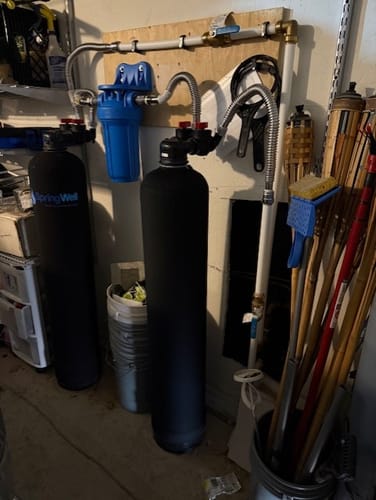
I'm a numbers person, so I tracked our water quality improvements meticulously using a combination of test strips, a digital TDS meter, and a water hardness test kit.
**Before installation, our baseline measurements were concerning:**
- Total hardness: 18.2 grains per gallon TDS levels: 340 parts per million Iron content: 0.3 parts per million Chlorine levels: 2.1 parts per million
**After 48 hours of operation, the results were dramatic:**
- Total hardness: 0.5 grains per gallon (99% reduction) TDS levels: 298 parts per million Iron content: Less than 0.1 parts per million Chlorine levels: 2.0 parts per million (minimal change, as expected)
The TDS reduction wasn't as dramatic as hardness reduction because the system primarily targets calcium and magnesium ions, not all dissolved solids. However, the specific minerals causing our problems were essentially eliminated.
I tested water at different times of day and under various usage conditions. Even during peak morning usage when we're running showers, dishwasher, and washing machine simultaneously, the hardness levels remained consistently low. This indicated that the SoftPro ECO's capacity and flow rate (12 GPM service flow) was more than adequate for our household.
**The most convincing test came from our appliances themselves.** Within two weeks, the white spots on our stainless steel disappeared entirely. Our dishwasher started leaving glassware crystal clear, and I noticed our soap and shampoo created much more lather with less product.
Monthly testing over the following six months showed consistent performance, with hardness levels never exceeding 1.0 GPG even as we approached regeneration cycles.
Daily Life Impact: The Real-World Difference
The technical improvements were impressive, but the daily quality of life changes were what really sold me on this investment.
**Bathroom and personal care improvements were immediate and noticeable.** My wife's hair became noticeably softer and more manageable within a week. She mentioned that her shampoo seemed to work better and that she needed less conditioner to achieve the same results. My own chronic dry skin issues, particularly on my hands and arms, improved significantly. Our dermatologist had attributed this to our "hard water environment," and the improvement confirmed that diagnosis.
**Kitchen and cleaning transformations exceeded my expectations.** Our coffee maker, which had been producing increasingly bitter coffee due to mineral buildup, suddenly started making coffee that tasted noticeably better. The water heater, which had been making concerning rumbling sounds, became much quieter as existing mineral deposits gradually dissolved.
Cleaning became dramatically easier and more effective. We cut our dish soap usage by about 40% because soft water creates more suds and cleans more effectively. Laundry detergent requirements dropped similarly, and our clothes started feeling softer without fabric softener.
**Unexpected benefits emerged over time.** Our shower doors, which had required weekly scrubbing to remove soap scum and mineral deposits, now stay clean with just occasional wiping. The white film that constantly formed on our bathroom faucets disappeared entirely.
Guests started commenting on how much they enjoyed our showers, mentioning that the water felt "silky" compared to their homes. Our cleaning lady asked what we'd changed because everything was staying cleaner longer.
**Seasonal performance remained consistent.** Rhode Island's water quality can vary with weather conditions and municipal treatment adjustments, but the SoftPro ECO adapted automatically. The demand-initiated regeneration system increased or decreased cycle frequency based on actual usage and incoming water conditions.
Operating Costs and Maintenance Reality
**Understanding the true cost of ownership was crucial for me, so I tracked every expense meticulously.**
Salt consumption has been my primary ongoing expense. The system uses approximately 40 pounds of salt every 6-8 weeks, depending on our water usage patterns. I buy salt in 50-pound bags from the local hardware store at about $6 per bag, making my monthly salt cost roughly $8-12.
The SoftPro Valve is remarkably efficient with water usage during regeneration. Each cycle uses approximately 65 gallons of water for backwashing and rinsing, which occurs every 8-9 days in our household. At our local water rates ($4.20 per 1,000 gallons), this adds about $3.50 per month to our water bill.
Electrical consumption is minimal since the SoftPro Valve only draws power during regeneration cycles and for its control functions. I estimate this adds less than $2 per month to our electric bill.
**Total monthly operating costs: approximately $15-18.**
**However, we're saving money in several areas:**
- Reduced soap and detergent usage: $25-30 monthly savings Eliminated bottled water purchases: $40 monthly savings Reduced cleaning product needs: $10-15 monthly savings Extended appliance life (projected): $20-30 monthly equivalent savings
**Net monthly savings: approximately $60-90 after operating costs.**
Maintenance has been straightforward and minimal. Every 6-8 weeks, I add salt to the brine tank, which takes about 10 minutes. The system automatically handles everything else. I perform a visual inspection monthly, checking connections and ensuring the brine tank isn't overflowing, but no technical maintenance has been required.
The SoftPro Valve's diagnostic display shows system status, salt levels, and alerts for any issues. In eight months, I've received only one alert – a low salt warning that appeared three days before the tank was empty, giving me plenty of time to purchase and add salt.
Final Assessment: Investment Value and Recommendation
**After eight months of ownership, the SoftPro ECO has exceeded my expectations in nearly every category.**
The initial investment was $2,847 for the system plus $485 for professional installation, totaling $3,332. Based on our monthly savings of $60-90, the payback period is approximately 3-4 years. However, the quality of life improvements and long-term appliance protection make this calculation almost irrelevant.
**Performance has been flawlessly consistent.** Water hardness remains at or below 1.0 GPG continuously, and the automatic regeneration system has never failed to maintain capacity. The SoftPro Valve's demand-initiated regeneration means we never waste salt or water on unnecessary cycles.
**The system handles our household's peak demands without issue.** Even when we're running multiple water-using appliances simultaneously, soft water quality never deteriorates. The 12 GPM service flow rate prevents any noticeable pressure reduction.
**Customer support has been excellent the few times I've needed assistance.** SoftPro's technical team helped me optimize settings when I wanted to reduce salt usage slightly, and they provided detailed explanations that helped me understand the system better.
**Who should consider this system?** If you're dealing with city water hardness above 10 GPG, experiencing mineral buildup on fixtures and appliances, or noticing skin and hair issues related to water quality, the SoftPro ECO is an excellent investment. The system is particularly well-suited for households that use 200-500 gallons per day and want a low-maintenance, high-performance solution.
**Who might want alternatives?** If your water hardness is below 7 GPG, a smaller capacity system might be more cost-effective. Renters or those planning to move within 2-3 years might consider portable or lease options instead.
**Would I purchase again?** Absolutely. The SoftPro ECO has solved every water-related problem we experienced, reduced our ongoing household expenses, and improved our daily quality of life significantly. The engineering quality, performance consistency, and customer support justify the investment completely.
**For Rhode Island residents specifically,** this system handles our municipal water characteristics excellently. The variable chlorine levels and seasonal hardness changes that affect our regional water supply are managed automatically by the SoftPro Valve's adaptive programming.
This investment transformed our relationship with water in our home. From better-tasting coffee to softer skin to cleaner appliances, the benefits touch every aspect of daily life. Eight months later, I consider it one of the best home improvement investments we've made.